The shift to Battery Electric Vehicles (BEVs) is transforming the automotive industry, and manufacturing processes are evolving to keep up. A great example of this is the OP 52 Station, a semi-automatic machine designed by ATS India to streamline the assembly of key BEV components. With its precision press tooling and gripper unit for part handling, the OP 52 Station boosts speed and accuracy, helping create more efficient production lines as BEV manufacturing continues to grow.
What is the OP 52 Station?
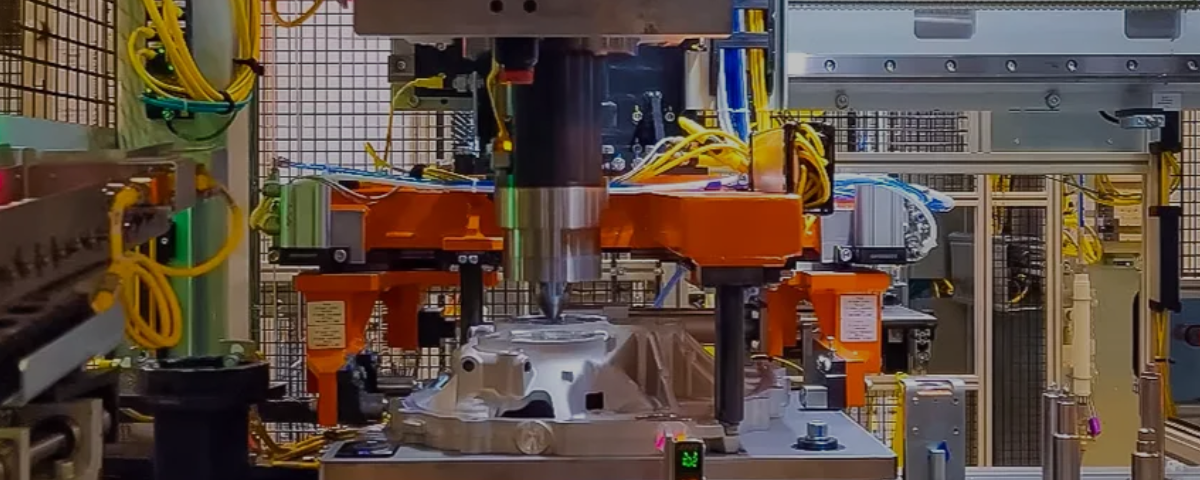
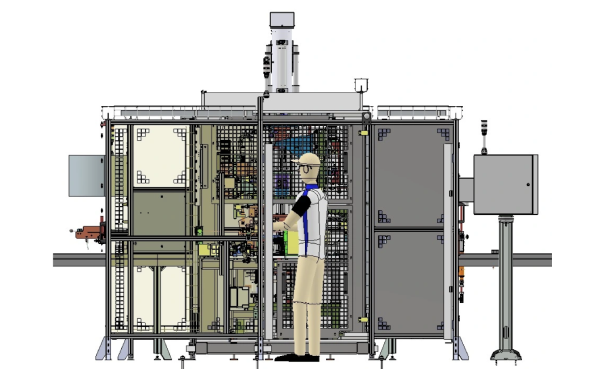
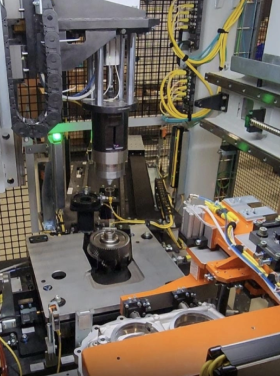
The OP 52 Station was designed to press a bearing onto the centre support and install a transfer axis from the bottom. It’s built to handle multiple tasks with precision, and it includes two main areas, or “nests” – one for loading the transfer axis and the other for loading the bearing. The station uses press tooling to carefully insert the bearing into the centre support and then attaches the assembly to the transfer axis shaft. There's also a gripper unit that picks up the centre support from a conveyor and positions it for further processing.
How Does It Work?
Here’s how the station operates:
- The operator loads the transfer axis and bearing into their respective positions.
- Once the cycle starts, servo-driven tooling moves the transfer axis into place for pressing, while the bearing is shifted into position.
- A gripper unit then picks up the centre support from the pallet and places it onto a plate with locating pins at the press position above the transfer axis.
- Press tooling presses the bearing into the centre support, and a backup tool from the bottom ensures everything is aligned properly.
- Finally, the bearing and centre support are inserted onto the transfer axis.
Sensors play a crucial role, detecting when parts are loaded correctly and when the assembly is properly aligned for pressing. This helps ensure the whole process runs smoothly, without errors or delays.
Challenges Overcome
Developing the OP 52 Station wasn’t without its challenges. One key hurdle was ensuring the station could complete all its tasks within a set cycle time while maintaining precision. Another challenge was integrating the station with a 50 Kn press to ensure it operated without issues. On top of that, the design and manufacturing had to be completed for two different locations under tight deadlines. Despite these obstacles, the team was able to deliver a functional and efficient station.
In the end, the OP 52 Station is now successfully operational, playing a key role in BEV production. The shift to BEV manufacturing may bring challenges, but it also opens up exciting opportunities for innovation, efficiency, and precision. It's great to see how technologies like the OP 52 Station are helping drive this transformation in the industry.