Let’s talk about what’s changing, why it matters, and where it’s headed.
Not too long ago, factories were all about manual effort, heavy lifting, and long hours.
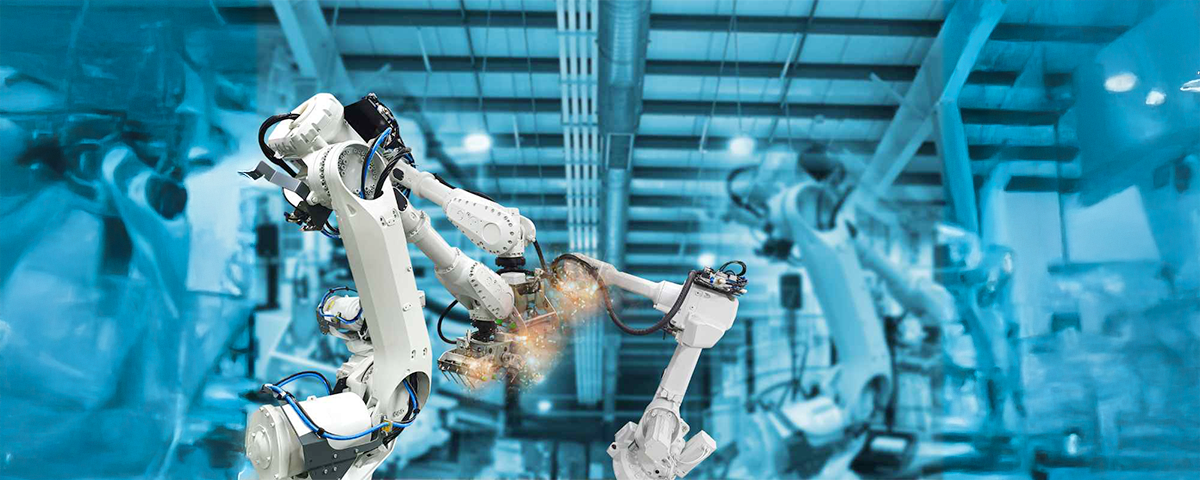
Fast forward to today, and we’re seeing robots, automation systems, and smart tech taking over
the routine, repetitive, and even risky tasks. This shift isn't just cool, it’s transforming the way we
manufacture everything from car parts to consumer electronics.
What’s Driving the Shift?
The demand for faster production, higher precision, and lower errors has pushed manufacturers to rethink
how work gets done. Add rising labour costs, safety standards, and global competition to the mix and
automation starts to look less like an option and more like a necessity.
Enter industrial robots and automation systems.
These aren't the robots from sci-fi movies. These are practical, task-focused machines that work
side-by-side with humans, loading parts, tightening screws, testing quality, and even managing inventory.
They are designed to make processes smoother, safer, and more reliable.
One Big Area of Change: Machine Tending
One of the most common applications of automation in manufacturing today is machine tending, where a
robot loads and unloads parts into machines like CNCs, lathes, and VMCs.
Here’s why it matters:
- Saves time: No more waiting for someone to manually place and remove each part.
- Improves safety: Fewer hands near moving parts means fewer accidents.
- Boosts consistency: Robots handle every part the same way, every time.
- Allows 24/7 production: Machines don’t need sleep. Production can continue after hours.
In fact, many factories are now running "lights-out" shifts, where machines and robots
work through the night without human supervision.
Where the Industry Is Headed?
According to the International Federation of Robotics (IFR), over 3.5 million industrial robots are now in use worldwide and that number is growing rapidly. In India alone, automation is gaining momentum, especially in industries like automotive, aerospace, pharmaceuticals, and precision engineering.
Collaborative robots (cobots) designed to work safely alongside people are also becoming more common.
And with AI and IoT entering the picture, robots are getting smarter, more adaptive, and more connected
than ever before.
It’s not just about replacing jobs, it is about reshaping roles. Humans are moving into more creative,
supervisory, and problem-solving tasks, while machines handle the repetitive grind.
And What About ATS?
At ATS India Pvt Ltd, we’ve been closely following this shift and now we’re stepping into it with a clear
goal: to bring smart machine tending solutions to Indian shop floors.
We’re currently developing robotic systems that are:
- Easy to integrate with existing CNC/VMC setups
- Reliable and tailored for high-mix, low-volume production
- Scalable for future automation needs
Our approach is simple, practical automation that actually fits your space, team, and budget.
Conclusion
Automation and robotics are no longer futuristic concepts, they’re here, and they’re
shaping the way we build, assemble, and deliver.
Whether you're a factory owner, an engineer, or someone just curious about where the industry is going,
one thing is clear: the future of manufacturing is smart, connected, and highly automated.
And it’s not too far away, it’s already happening.