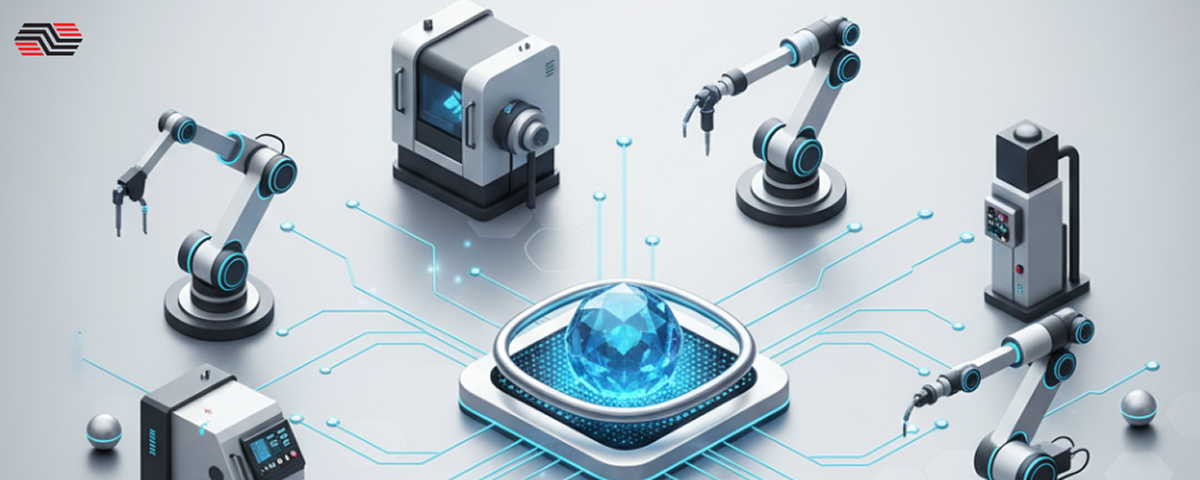
Artificial Intelligence is reshaping how factories think and operate. But here’s the thing-AI in manufacturing isn’t about replacing human skill; it’s about enhancing it. What if machines could predict failures before they happen? Or what if production could adapt automatically to real-time conditions? These aren’t future scenarios anymore-they’re today’s manufacturing standards.
For industries where precision defines success like aerospace, automotive, and industrial machining AI is becoming the backbone of consistency, reliability, and efficiency.
How AI Transforms the Manufacturing Process
AI integrates with smart sensors, CNC controls, and ERP systems to create a connected, intelligent environment. Every piece of data- temperature readings, vibration levels, tool wear-is analysed instantly. The outcome? Automated insights that make machines smarter and production smoother.
This shift allows manufacturers to move from reactive fixes to proactive optimisation. Instead of stopping a line when something breaks, AI detects anomalies early and keeps operations running with minimal downtime.
Key Applications of AI in Manufacturing
1. Predictive Maintenance
AI algorithms continuously analyze machine data like vibration, sound, torque, and temperature.
They spot signs of potential failure far before they affect output.
Result:
- Lower unplanned downtime
- Longer machine lifespan
- Reduced maintenance costs
2. Process Optimization
AI fine-tunes production in real time. By learning from historical machining data, it automatically adjusts parameters like spindle speed and feed rate to ensure consistent accuracy.
Result:
- Faster cycle times
- Energy efficiency
- Stable performance across batches
AI-powered vision systems can detect even microscopic defects on a part’s surface. Unlike human inspection, these systems never tire and never miss a flaw.
Result:
- Zero rejection rate
- Consistent quality output
- Enhanced customer satisfaction
4. Supply Chain & Production Planning
AI forecasts demand, optimizes inventory levels, and aligns production schedules automatically.
This ensures that every order moves smoothly from design to dispatch.
Result:
- Better resource allocation
- On-time delivery
- Improved cost control
Benefits of AI in Manufacturing
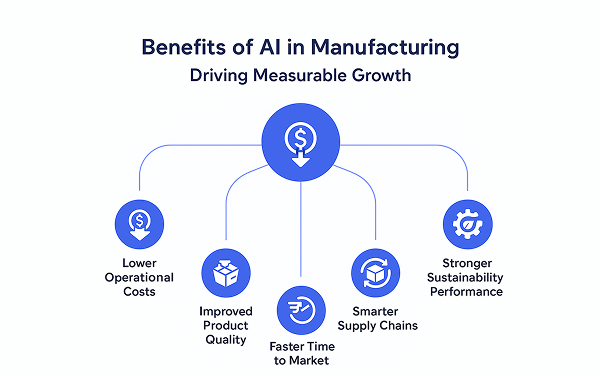
AI doesn’t just boost efficiency-it builds resilience. Let’s look at how it drives measurable growth across operations.
1. Lower Operational Costs
Optimized energy use and reduced downtime save money while increasing equipment life.
2. Improved Product Quality
Real-time defect detection ensures every component meets the highest standards.
3. Faster Time to Market
Automation speeds up decision-making and accelerates production cycles.
4. Smarter Supply Chains
Predictive planning eliminates material shortages and scheduling conflicts.
5. Stronger Sustainability Performance
Less waste, fewer errors, and more efficient resource use contribute to greener manufacturing.
AI
AI for a Smarter, More Reliable Future
AI’s biggest impact lies not just in automation, but in intelligence-turning every machine, process, and operator into part of a connected, learning ecosystem.
At ATS India, this technology is driving next-generation precision manufacturing. By using AI-backed analytics, our team continues to deliver 100% on-time, zero-rejection results-a benchmark for quality and reliability in every industry we serve.
So, when we ask-can machines think smarter? The answer is yes. And at ATS India, they already do.