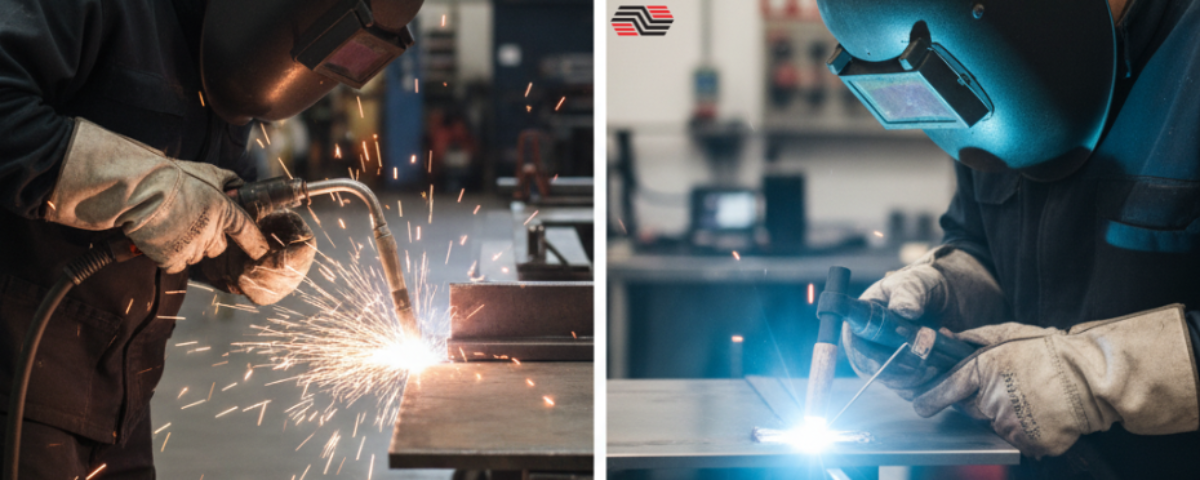
At ATS India, welding is more than a process - it’s a commitment to precision, performance, and long-term reliability. In fabrication and manufacturing, the right welding choice can define how efficiently a project progresses from concept to completion. Between the two leading methods, MIG (Metal Inert Gas) and TIG (Tungsten Inert Gas), MIG welding often proves superior for large-scale industrial applications. Here’s why it leads the way.
Higher Productivity and Faster Welds
Speed is crucial when production volumes are high. MIG welding’s continuously fed wire enables rapid deposition and uninterrupted welds, unlike TIG, which demands more manual control. The result—faster cycle times, less downtime, and higher throughput. For industries handling heavy fabrication such as automotive, construction, or machinery, this translates into a clear operational advantage.
Easier to Learn and Operate
MIG welding is simpler and more forgiving. While TIG requires steady precision, flawless arc control, and manual filler feeding, MIG’s semi-automatic wire feed streamlines the process. Operators experience less fatigue, training takes less time, and weld consistency remains high—ideal for meeting tight production timelines without sacrificing quality.
Better for Thicker Materials
TIG shines on delicate, thin materials, but MIG dominates where heavy-duty strength is required. With higher heat input and deeper penetration, MIG welding ensures solid, long-lasting joints in thick metals and structural parts. It’s the clear choice for demanding fabrication work where durability cannot be compromised.
Cost-Effective and Efficient
MIG welding delivers measurable cost advantages. Its faster operation, easier automation, and minimal rework cut down both time and expenses. The process uses consumables efficiently, reduces material waste, and boosts project profitability—making it the smarter investment for large-scale production.
Consistent Quality and Clean Finish
Advanced MIG systems with optimized shielding gases produce uniform, defect-free welds. The reduced spatter results in cleaner work, less post-weld finishing, and improved overall aesthetics. This consistency makes MIG a dependable choice when both appearance and performance matter.
Ideal for Automation and Scalable Manufacturing
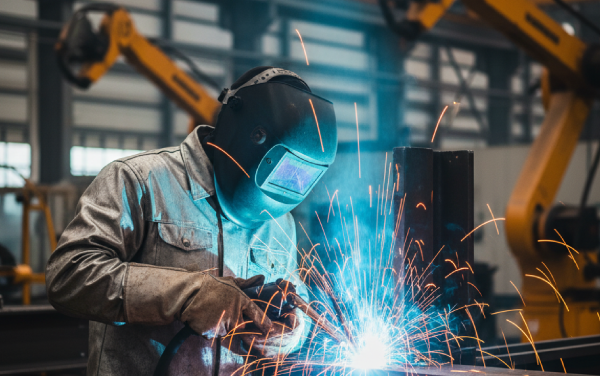
In automated or robotic setups, MIG welding integrates effortlessly. Its parameters are easy to program and replicate, ensuring every weld maintains identical quality. This compatibility with automation makes MIG indispensable in modern manufacturing environments focused on precision, scalability, and consistency.
When TIG Welding Still Counts
TIG welding holds value in specific scenarios. It excels in projects demanding intricate detail, fine finishes, or extremely thin materials. When craftsmanship and visual perfection take priority, TIG is still the go-to process. Each technique has its purpose- MIG for productivity and strength, TIG for finesse and finish.
The Takeaway
Both MIG and TIG welding serve important roles, but MIG clearly leads for industries emphasizing speed, cost-efficiency, and automation. By leveraging MIG’s strengths, ATS India continues to deliver durable, high-quality results built for industrial reliability.